

If you own an investment property in Victoria, rental rules are changing. From 1 March 2027, new minimum energy efficiency standards will roll out in stages, with further obligations extending to 2030.
The good news is that there’s time to prepare. Planning ahead helps rental providers understand their responsibilities, budget for improvements and avoid unexpected expenses. Here’s a clear run-through of what’s coming and what to think about now.
The key changes at a glance
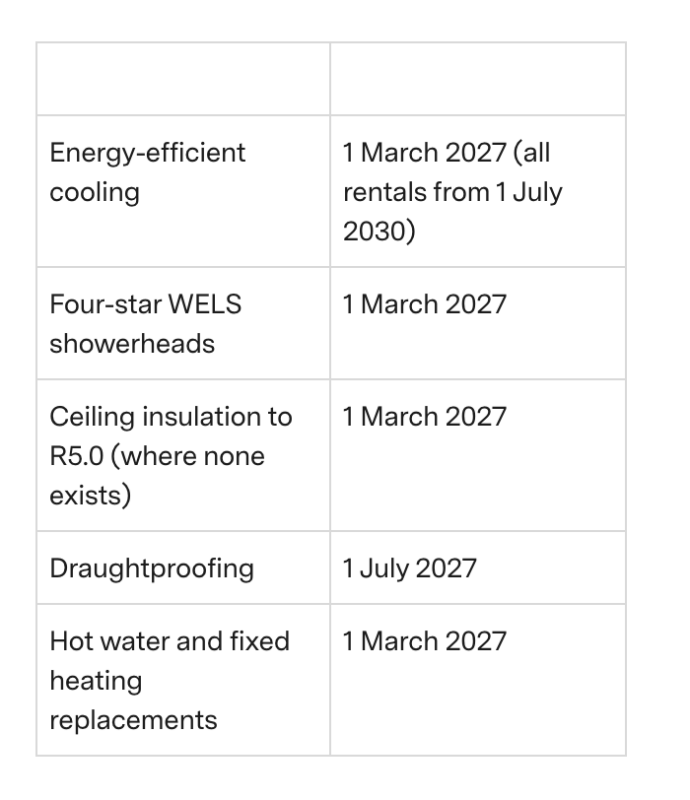
Energy-efficient cooling (from 1st March 2027)
Compliant fixed cooling will generally be required in the main living area when a new rental agreement begins, subject to applicable exemptions.
From 1 July 2030, the requirement will extend to all rental properties, again subject to applicable exemptions. If you have a long-term tenant, you may not need to act straight away, but it’s worth planning for the 2030 deadline rather than leaving it to the last minute.
Showerheads (from 1st March 2027)
New rental agreements will generally require showerheads to meet a four-star Water Efficiency Labelling and Standards (WELS) rating. Exceptions may apply where plumbing or property constraints prevent effective installation.
This is typically one of the simpler and lower-cost upgrades, so it’s an easy one to tick off early.
Ceiling insulation (from 1st March 2027)
For applicable new rental agreements, ceiling spaces without existing insulation will generally need to be insulated to an R5.0 rating by a qualified installer.
Importantly, existing insulation does not automatically need to be upgraded to R5.0. If your property already has ceiling insulation, the new requirement may not apply, but it’s worth confirming what’s actually in the roof space.
Draughtproofing (from 1st July 2027)
Where gas appliances are present, the required gas safety check must be completed before draughtproofing work proceeds. Build this into your scheduling so the work isn’t delayed or done out of order.
Hot water systems and fixed heating (from 1st March 2027)
When an existing hot water system or fixed heater reaches the end of its serviceable life and cannot be repaired, replacement requirements will apply.
Hot water systems will generally need to be replaced with an energy-efficient electric heat pump or electric-boosted solar system.
Fixed heaters will need to be replaced with compliant energy-efficient electric systems.
Both are subject to applicable exemptions. Because these obligations are triggered by a system failing, they can arrive as an unplanned expense. Knowing the age and condition of your existing systems now lets you budget before a breakdown forces the issue.
How to prepare now
Audit your property. Check the cooling, showerheads, ceiling insulation, hot water system, heating and the condition of doors, windows and vents.
Check your lease timing. Many requirements apply when a new rental agreement begins, so note when each lease is due for renewal or turnover.
Budget ahead. Spread the cost of upgrades rather than facing several at once, and ask your accountant about the tax treatment of improvements.
Use qualified tradespeople. Insulation must be installed by a qualified installer, and gas safety checks need to happen before draughtproofing.
Confirm exemptions. Exemptions may apply depending on your property’s plumbing, structure or circumstances, so check the official guidance for your situation.
Thinking of buying an investment property?
These standards are also worth factoring into your purchase decisions. A property that already meets or is close to meeting the requirements can save you money and hassle after settlement, while one that needs significant upgrades should be priced and negotiated accordingly.
At Industry Insider Property, we help buyers look beyond the surface and understand the true cost of ownership before they commit. If you’d like a hand assessing an investment property, or planning ahead for your existing portfolio, get in touch with our team.
This post is general information only and not legal or financial advice. Requirements, timing and exemptions may change, so please check the latest guidance from the relevant government authority and speak to your professional advisers before making decisions.